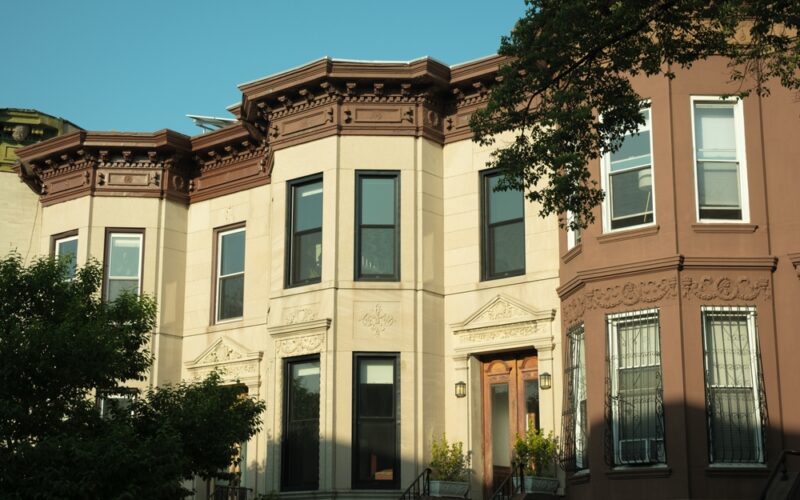
Community Voices Submission by Crown Heights Homeowner, G. Simmons
As housing costs continue to rise across New York City, many African American, Caribbean, and immigrant families who worked for decades to purchase and own small two-family homes are finding themselves under intense financial pressure. While city leaders often focus on large developers and corporate landlords, many small homeowners say they are being overlooked and overregulated. Families who depend on rental income from homes they personally own and live in are struggling with long housing court delays, nonpaying tenants, and restrictions on short-term rentals that once helped them stay financially afloat. For many longtime homeowners in communities like Crown Heights, East Flatbush, Canarsie, and Southeast Queens, the dream of building generational wealth through homeownership is beginning to feel out of reach. Local Law 18 was the law that stopped short term rentals in NYC.
For years, New York City officials have spoken about affordability, equity, and protecting working families. But for many small homeowners across Brooklyn and Queens, the reality feels very different.
My family owns a two-family home in Crown Heights that we worked hard to purchase and maintain. We are not investors with dozens of properties. We are not a real estate corporation. We are a Black family that owns and lives in our home and depends on rental income from the second apartment to help cover the rising costs of living in New York City.
Like many African American and Caribbean families, our home is more than just property. It represents years of sacrifice, stability, and an opportunity to build generational wealth in a city where Black homeownership has historically been difficult to achieve and maintain.
Not long ago, we had actually found a way to make things work financially.
We responsibly used one apartment in our owner-occupied home for short-term rentals, and the extra income helped us stay ahead of rising costs in New York City. The income helped us pay our mortgage, property taxes, maintenance costs, utilities, and unexpected repairs. For the first time in a long time, it felt like we were finally getting ahead instead of constantly struggling to survive financially.
Then New York City changed the rules.
The city aggressively cracked down on short-term rentals, arguing that they were contributing to the housing crisis. But families like ours were never the problem. A homeowner renting out one apartment inside the home they personally own and live in is not the reason New York City has a housing shortage, no matter how many times politicians repeat that argument.
Large corporations and investors buying entire buildings for profit are one thing. A working-class family trying to keep ownership of their two-family home by renting out one apartment is something completely different.
Yet the city treated everyone the same.
The crackdown removed one of the few flexible financial tools that small homeowners had. Instead of targeting large-scale abuse, the rules ended up hurting seniors, working-class families, and longtime homeowners who depended on short-term rental income to remain financially stable in neighborhoods they helped build.
Ironically, after the city pushed many homeowners away from short-term rentals, families like mine were left with long-term rental situations that carry enormous risk and very little protection.
We currently have a tenant living in the apartment inside our home who has not paid rent in two years.
For two years, my family — the actual owners of the property — have continued paying the mortgage, taxes, insurance, legal fees, and maintenance costs while going back and forth through the housing court system. Meanwhile, the tenant continues living comfortably. We see new clothes, a new car, and a lifestyle that suggests they are not struggling nearly as much as we are.
Yet under the current system, homeowners like us are expected to simply absorb the loss.
The emotional toll has been exhausting, but the financial burden has been even worse. At one point, we were dangerously close to foreclosure. If not for help from family and friends, we could have lost the home that we own and live in entirely.
Imagine working your entire life to purchase a home in New York City only to risk losing it because someone living in your property refuses to pay rent while the system moves painfully slow.
This is why so many small homeowners are frustrated.
The city discourages short-term rentals that helped many homeowners survive financially, but then offers almost no meaningful support when a long-term tenant stops paying rent. Small homeowners are expected to carry the entire financial burden alone while cases drag on for months or years in housing court.
There should be emergency protections for owner-occupied homes in situations like this. If the city truly wants to prevent foreclosures and preserve affordable housing, it should create programs that temporarily subsidize rent payments for small homeowners stuck in lengthy court proceedings with nonpaying tenants.
Instead, many families feel abandoned.
What makes this even more frustrating is that city leaders often speak about protecting tenants while ignoring the reality facing small homeowners. There is a major difference between a billionaire developer with hundreds of units and a family that owns and lives in a two-family home and relies on rental income to survive.
Small homeowners are not giant corporations. Many of us are middle-class or working-class families trying to hold onto homes in neighborhoods where our parents and grandparents fought to remain during difficult periods in New York City history.
There is also a larger issue that many people do not want to discuss openly: these policies are slowly pushing African American families out of homeownership in New York City.
For decades, Black families fought to buy homes in neighborhoods like Crown Heights, Bedford-Stuyvesant, East New York, and Canarsie. Homeownership became one of the few ways families could build wealth and leave something behind for future generations. But today, rising costs, overregulation, and tenant issues are forcing many longtime homeowners to sell.
And once those homes are sold, they are often purchased by larger investors or wealthier newcomers who can better absorb financial losses.
That is not affordability. That is displacement happening in a different form.
If New York City truly wants to support working families and preserve Black homeownership, it must start treating small homeowners as part of the affordability conversation.
The city should reconsider how short-term rental rules impact owner-occupied homes. There should be clearer distinctions between corporate operators and small families renting out part of the homes they personally own and live in. The city should also create faster legal pathways for owner-occupied two-family homes dealing with nonpaying tenants and establish emergency financial relief programs that help prevent foreclosure while cases move through court.
Something has to give.
Because right now, many small homeowners feel like New York City wants them to fail. The city talks about helping working families, protecting communities, and preserving diversity, but many homeowners believe the policies coming from City Hall are doing the exact opposite.
And if this continues, more African American and Caribbean families will be forced to leave the very neighborhoods they spent generations fighting to call home.
We need to be able to rent our extra partment for short term rental, less than 30 days.
Residents, homeowners, tenants, advocates, and community leaders are encouraged to submit opinion articles, ideas, personal stories, and solutions related to affordability in New York City. Send Community Voices submissions to [email protected] with “Affordability.NYC Community Voices” in the subject line.