





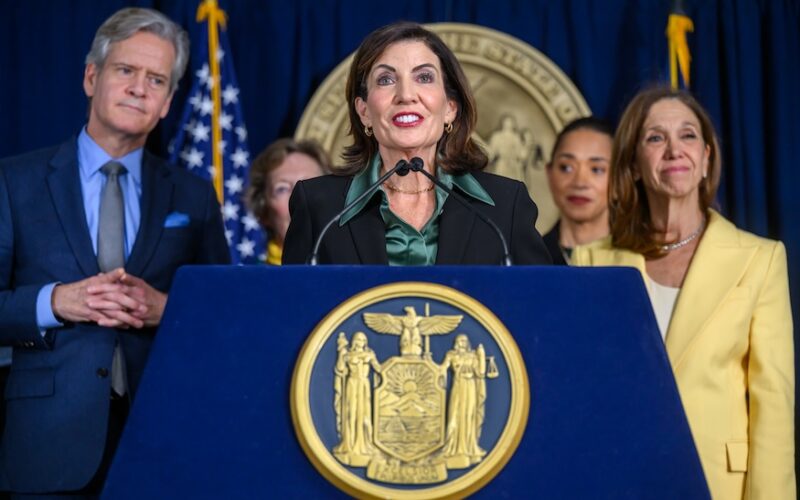
Governor Hochul Announces Milestone in Health Legislation (Susan Watts:Office of Governor Kathy Hochul)
Governor Kathy Hochul has shared that New York State lawmakers reached consensus on making medical aid in dying available to terminally ill adults—those with less than six months to live. This creates a paradigm shift for end-of-life options in New York. The bill, which includes built-in amendments and safeguards, is set for passage and will be enacted six months after its signing in January.
This announcement came after persistent advocacy efforts, extended legislative negotiation, and many intimate discussions among the Governor, faith groups, healthcare practitioners, lawmakers, and families who have experienced the ordeal of protracted terminal illness.
Listening to Families and Those Who Care
According to Hochul, the most compelling input came from regular New Yorkers describing the emotional weight of being at the bedside of a dying loved one suffering irreversible losses.
“None of us is untouched [by the loss of someone to a harrowing disease],” Hochul stated. “Life and death are twin certainties. I drew inspiration from the resilience of families and wanted to help provide closure, respect, and healing.”
For caregivers, the measure means more than legislation: it acknowledges the exhaustion and helplessness tied to witnessing a loved one’s relentless suffering when options are gone. Hochul characterized the agreement as an answer to these direct experiences.
Policy Rooted in Personal Loss
The Governor reflected on losing her mother to ALS, a disease that took her mother’s strength and her voice after a lifetime of caring for others.
“That’s what ALS took from my mom—her words, her independence,” Hochul said, recognizing parallels in community stories she’s heard.
She was careful to note that the law is not about accelerating death but about relieving unavoidable and prolonged suffering as death nears.
“We’re not ending life early,” she said. “We’re ending drawn-out dying, so goodbyes can be said with dignity, surrounded by loved ones, not in pain or isolation.”
Scope and Limitations of the Law
The new option will be available specifically for individuals diagnosed with a terminal illness expected to cause death within six months. Hochul emphasized that this law has stringent protections to ensure that choices are fully voluntary and carefully evaluated.
She mentioned concerns over the possibility of individuals being coerced into the decision by others.
“I heard worries about coercion and undue pressure, and I took them seriously,” Hochul remarked. “This law is about ensuring genuine, unpressured consent.”
There are provisions for dual medical assessments, evaluations of mental competence, and protections for medical providers or facilities with moral or religious objections.
“This isn’t something anyone is forced to do,” Hochul insisted. “It’s about having a choice.”
Upholding Freedom at Life’s End
The Governor tied the agreement to New York’s broader record of expanding individual rights, stressing that autonomy over end-of-life decisions is a critical extension of personal liberty.
“Who am I to say no to you or your loved one’s final plea?” she asked. “That’s why this agreement is happening.”
She continued, “New York stands as a beacon for freedom of religion, speech, and personal choice. Now, we’re including the terminally ill and their families in those freedoms.”
Support and Compassion for Caregivers
For many caregivers, the new law delivers peace of mind and a sense of control during life’s hardest moments. Even though not all families may choose this path, it introduces an alternative to suffering without hope of recovery.
Hochul noted that caregivers often deal with enduring emotional pain from these episodes. By introducing medical aid in dying with rigorous safeguards, New York acknowledges not only the patient’s rights but also the burdens carried by their loved ones.
“This is one of the most difficult calls I’ve faced as Governor,” Hochul commented. “But the voices and stories of those most affected are what moved me to act.”
If put into effect as planned, New York will be among a group of states that permit medical aid in dying, a change supporters say ensures dignity and choice for families in their deepest hours of need.