






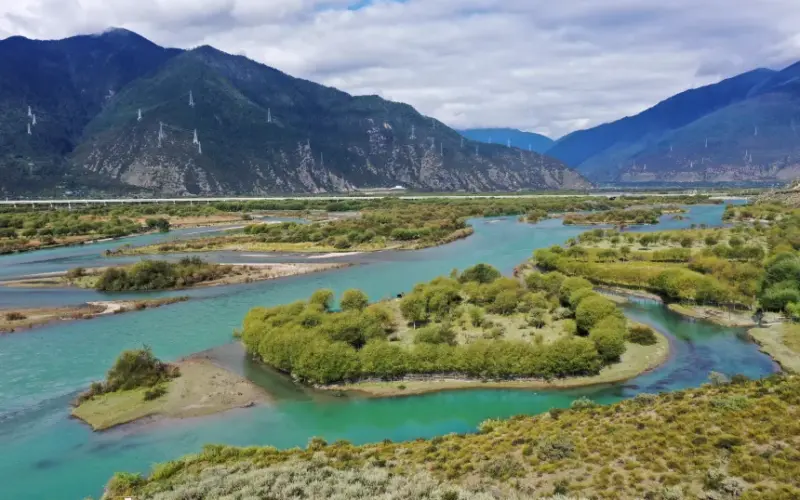
Deep within the Himalayas, far from China’s densely populated east coast, a significant river bend has been chosen as the heart of one of the country’s most daring – and hotly debated – infrastructure projects.
In this remote region, a $168 billion hydropower facility is on track to become the world’s top producer of electricity – positioning China for a future centered on electric vehicles and energy-intensive artificial intelligence advances.
Earlier this year, Chinese President Xi Jinping instructed that the development proceed “resolutely, methodically, and efficiently” during an uncommon visit to Tibet, where Beijing continues to tighten its hold with a focus on economic growth and stability.

Analysts suggest that the hydropower project, established along Tibet’s lower Yarlung Tsangpo river, will set a new precedent in the field of engineering. By harnessing a 2,000-meter vertical drop through tunnel boring, China seeks to utilize this Asian water artery as discussions around water security intensify worldwide.
This initiative could bolster international attempts to fight climate change by lessening China’s – the globe’s foremost emitter – reliance on coal. Yet, its construction threatens to disturb a rare ecosystem and the homes of longtime residents.
Tens of millions downstream in India and Bangladesh also depend on the river, where scientists highlight that effects on the ecosystem, especially for fisheries and crops, still lack thorough study.
Indian headlines have accused the development of being a looming “water bomb” – and its position near the disputed China-India border could see it turned into a new flashpoint in the long-standing regional rivalry.