


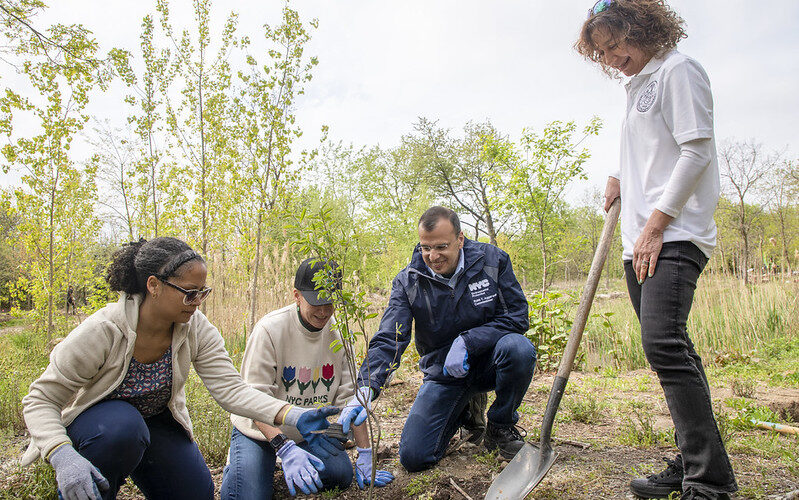
A City Turning To Trees To Fight Rising Heat
The NYC Tree Canopy 2040 Plan is now at the center of the city’s climate strategy, promising more shade for neighborhoods hit hardest by rising heat. But even as crews plant new trees across Queens and other boroughs, questions remain about how the ambitious goal will be funded.
In Cambria Heights, Queens, residents recently watched workers unload elm, cherry, and red maple trees along quiet residential blocks. The plantings mark a small but visible step toward a citywide goal of 30 percent tree canopy coverage by 2040.
What Is The NYC Tree Canopy 2040 Plan
The NYC Tree Canopy 2040 Plan is the city’s long-term strategy to expand tree coverage across all five boroughs. Officials say the goal is not only about beautification but also about protecting residents from rising temperatures and climate impacts.
The plan sets a formal deadline of 2040 to reach 30 percent canopy coverage citywide. It replaces the older system that relied heavily on 311 requests and instead uses a structured planting schedule focused on need and equity.
The city is divided into more than 400 zones. Each zone receives tree planting, maintenance, and stump removal on a rotating cycle, ensuring all neighborhoods are eventually covered while prioritizing those most at risk.
Heat-Vulnerable Neighborhoods First In NYC Tree Canopy 2040 Plan
A central focus of the NYC Tree Canopy 2040 Plan is addressing extreme heat in underserved neighborhoods. Areas like Cambria Heights experience higher temperatures due to limited tree coverage and dense pavement.
City data shows a clear gap. Heat-vulnerable neighborhoods have about 19 percent tree canopy coverage, while other areas reach around 26 percent. The citywide average stands at just over 23 percent.
Recent plantings in eastern Queens reflect this shift in strategy. Parks Department crews are placing trees in blocks that historically lacked shade, aiming to reduce long-term heat exposure and improve public health.
Still, some residents have raised concerns. Complaints include sidewalk damage from roots and interference with underground infrastructure such as sewer lines.
Despite this, city officials maintain that trees are essential infrastructure. They reduce heat, improve air quality, and help manage stormwater during heavy rainfall.
Funding Questions Around NYC Tree Canopy 2040 Plan
While the NYC Tree Canopy 2040 Plan sets a clear goal, its funding remains uncertain.
City Hall has not committed a dedicated budget for the initiative. Instead, officials say the plan will rely on existing agency funds and outside partnerships.
Environmental groups warn that the cost of achieving the goal will be significant. One estimate places the price of planting one million trees at around 500 million dollars.
At the same time, the Parks Department has faced budget reductions, raising concerns about whether staffing and long-term maintenance can keep pace with new plantings.
Experts stress that planting trees is only part of the work. Long-term care such as watering, pruning, and bed maintenance is essential for survival and effectiveness.
Bigger Trend: NYC Warming And Urban Tree Strategy
The NYC Tree Canopy 2040 Plan comes as New York faces increasing heat due to climate change. The city could see temperature increases of 3 to 6 degrees by the 2040s, according to climate projections.
Urban heat island effects already make some neighborhoods significantly hotter than others due to dense infrastructure and limited green space.
Trees are considered one of the most effective tools for cooling neighborhoods naturally. They also help reduce flooding, improve air quality, and support public health.
New York has successfully implemented large-scale planting before, including the MillionTreesNYC initiative, which met its target ahead of schedule. Advocates say the current effort will require even stronger coordination and funding to succeed.
What Happens Next For NYC Tree Canopy 2040 Plan
The NYC Tree Canopy 2040 Plan will continue expanding through its zone-based planting system, with high-heat neighborhoods scheduled for early completion by the end of 2027.
Each community district is on a three-year planting rotation, with full cycles repeating every nine years. The plan also includes efforts to expand planting onto private property and protect existing mature trees.
However, the biggest challenge remains funding. Without long-term financial commitment, experts say the city may struggle to meet its 2040 target.
For now, neighborhoods like Cambria Heights are seeing the early stages of a greener future take shape one tree at a time.
What Readers Want To Know
What Is The Goal Of The NYC Tree Canopy 2040 Plan?
The city aims to increase tree canopy coverage to 30 percent by 2040 to reduce heat, flooding, and pollution.
Which Areas Are Being Prioritized First?
Heat-vulnerable neighborhoods such as parts of Queens, including Cambria Heights, are being prioritized.
Is Funding For The Plan Secured?
Not yet. The city is relying on existing budgets and external funding sources without a fully dedicated allocation.







Leave a Reply