


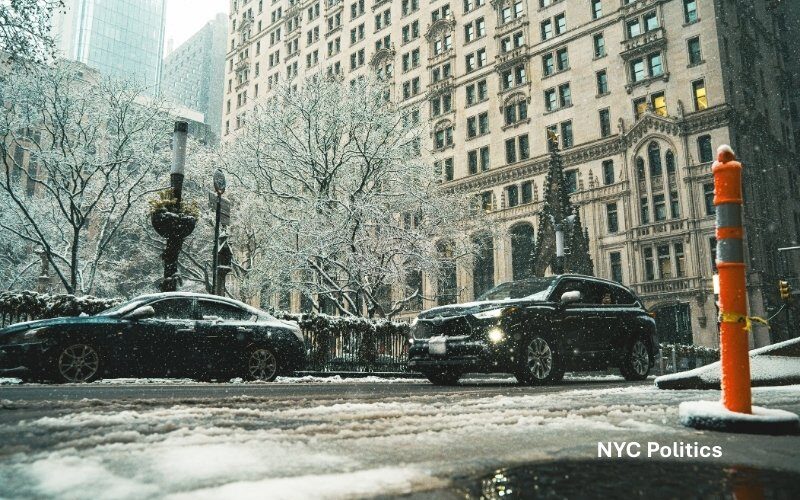
New Yorkers hear a lot of political noise every week but the NYC Speed Limit Battle isn’t just another headline. This fight over lowering speed limits cuts to the heart of how city leaders prioritize real safety on the streets where pedestrians, cyclists, delivery workers, kids, and seniors live and move every day.
At its core, the NYC Speed Limit Battle is not just about numbers on a sign. It’s about whether our leaders will act boldly to protect people or continue pointing fingers while avoidable crashes happen again and again.
Where the NYC Speed Limit Battle Started
In 2024, New York State passed what became known informally as “Sammy’s Law,” named after 12‑year‑old Sammy Cohen Eckstein, who was killed by a speeding driver in Brooklyn. That law gave New York City the power to lower speed limits from 25 miles per hour to 20 on streets where slower speeds could save lives.
For traffic safety advocates, this was a moment of hope evidence‑backed, common‑sense change that could directly reduce deaths and serious injuries. Research shows that even small reductions in speed dramatically reduce the severity of crashes, which is why cities around the world have adopted 20 mph zones with success.
But in the months since, the NYC Speed Limit Battle has shifted from hope to gridlock. Rather than a sweeping citywide policy, we’ve seen stop‑and‑start progress: limited zones, sporadic patches of slower limits, and a political blame game that would make even seasoned Albany lawmakers cringe.
Why the NYC Speed Limit Battle Has Become Political
Mayor Zohran Mamdani campaigned on street safety reform. But since taking office, his administration has been slow to implement broad changes across the five boroughs. Instead, city officials have suggested the City Council must pass a local law before speed limits can be widely lowered.
City Council leaders, including Speaker Julie Menin, counter that the law already gives the city authority to act through the Department of Transportation and that the mayor’s office is stalling.
The result? Fragmented action, limited slow zones, and confusion instead of clarity all while the NYC Speed Limit Battle plays out publicly, with no obvious end in sight.
This political stand‑off makes it clear: neither side wants to take full responsibility for taking tough, citywide action.
The Human Toll Behind the Politics
To some officials, this may be a matter of legislative interpretations or bureaucratic nuances. But to everyday New Yorkers, the stakes are personal.
Consider the delivery worker who weaves between cars and buses in Midtown. Or the parent walking with a stroller in Queens. Or the teenager crossing near a subway entrance in the Bronx. For people like them, the NYC Speed Limit Battle is not abstract it’s a matter of life and death.
Roughly 154,000 crashes have been reported in NYC since Sammy’s Law went into effect, resulting in tens of thousands of injuries and dozens of deaths impacts that disproportionately affect the most vulnerable street users. These are not just numbers they are union members, grandparents, kids, and neighbors.
Small Wins, Big Gaps
There have been some moves: the city has created about two dozen new areas with lower limits, often called neighborhood slow zones. These changes reflect good intentions, but at a fraction of the scale advocates expected.
And while slowing speeds in a handful of corridors helps, it never solved the core of the NYC Speed Limit Battle: why citywide action hasn’t been embraced and executed consistently.
Why Citywide Action Matters
Data from cities around the world including London, Amsterdam, and parts of San Francisco show that reducing speed limits at scale can:
- Lower deaths and serious injuries, especially for pedestrians and cyclists.
- Increase compliance with safer driving behavior.
- Encourage walking and biking, boosting local commerce and quality of life.
- Reduce noise and improve neighborhood livability.
New York City has the evidence. It has the legal authority. What it doesn’t have yet, is political coordination.
What’s Driving the Division?
There are three major drivers in the NYC Speed Limit Battle:
1. Political Priorities Over Street Safety
Some leaders are wary of appearing “anti‑motorist” or worry about political backlash from drivers even if slower limits would save lives.
2. Bureaucracy and Legal Interpretation
The mayor’s office and City Council leadership disagree on statutory authority and process, creating a stalemate that delays meaningful action.
3. Competing Advocacy Pressures
Business lobbies, neighborhood groups, transportation advocates, and community boards each push for different priorities, leaving policymakers trying to balance conflicting demands.
But here’s the plain truth: when slow speed limits are proven to reduce harm, hesitation becomes a political liability not an asset.
Voices from the Street
In a city where nearly half of all residents walk to work and more than 200,000 people ride bicycles daily, the stakes couldn’t be clearer. Drivers, too, benefit from safer street designs fewer crash liabilities, smoother traffic flow at predictable speeds, and reduced emergency response costs.
When residents speak whether at community board meetings or in local media they often voice the same message: “Do it everywhere, not just in select blocks.” That’s the sentiment of a city tired of half‑steps and cosmetic fixes.
The Path Forward in the NYC Speed Limit Battle
To break the gridlock, several approaches could help:
👉 Clear Legislative Authority
City Council could pass a bill clarifying citywide speed limit reductions, removing ambiguity about who has the authority.
👉 Stronger DOT Leadership
The Department of Transportation must move from pilot projects to comprehensive implementation, backed by data, mapping, and community engagement.
👉 Public Accountability
Leaders must explain clearly and publicly why broad action hasn’t happened yet, and set clear deadlines that New Yorkers can track.
Why This Debate Matters to You
The NYC Speed Limit Battle is not niche. It touches:
- Public safety and justice.
- Daily quality of life for families, workers, and seniors.
- How political decision‑making actually serves the people.
As New York continues to grow and change, the way we design and regulate our streets will send a message: Do we value human life and community well‑being or do we let politics slow progress?
Final Takeaway
In the end, winning the NYC Speed Limit Battle won’t be about who cites legal authority better. It will be about whether leaders choose action over inertia. Whether they listen to data. And whether they respect the voices of New Yorkers who walk our streets every day.
Source Note: Factual reporting and context were drawn from NYC Politics coverage of the ongoing NYC Speed Limit Battle, including quotes from city officials and safety advocates.
Frequently Asked Questions
What is the NYC Speed Limit Battle about?
The NYC Speed Limit Battle refers to the ongoing disagreement between Mayor Zohran Mamdani and City Council leaders over lowering speed limits on city streets to improve safety for pedestrians and cyclists.
Which streets are affected by the speed limit changes?
Currently, only select corridors designated as “neighborhood slow zones” have reduced speed limits, while broader citywide implementation is still under discussion.
When might New Yorkers see citywide lower speed limits?
There is no official timeline yet; city leaders continue to debate authority and process, and implementation will depend on coordinated action by the mayor’s office and City Council.











Leave a Reply