


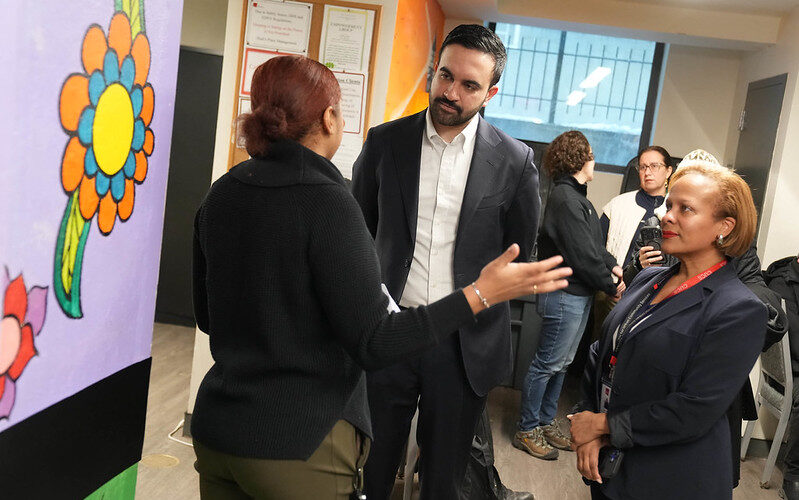
Mamdani’s encampment reversal is now at the center of New York City’s political debate, after Mayor Zohran Mamdani signaled support for a more structured approach to homeless encampment removals. The shift marks a notable change in tone from his earlier opposition to city sweeps and has sparked reactions across the five boroughs.
For months, homeless encampments have been one of the most visible and emotional issues facing New York City. Tents under highways, makeshift shelters in parks, and sidewalk encampments near transit hubs have raised concerns about public safety, sanitation, and the city’s ability to respond to mental health crises. Now, Mamdani’s encampment reversal is forcing both supporters and critics to reassess where City Hall stands.
What Is Mamdani’s Encampment Reversal?
Mamdani’s encampment reversal refers to the mayor’s decision to back targeted encampment removals often called “sweeps” when outreach efforts fail and conditions pose safety risks. Previously, Mamdani had aligned with advocates who argued that sweeps criminalize homelessness and displace vulnerable people without offering lasting solutions.
However, facing mounting pressure from residents, business owners, and local officials, the mayor has acknowledged that unmanaged encampments can create serious public health and safety problems. His updated stance supports a more coordinated approach that pairs enforcement with social services, mental health support, and shelter placement.
The change does not signal a full endorsement of aggressive enforcement. Instead, it outlines a structured response model:
-
Expanded outreach teams
-
Increased shelter placement efforts
-
Mental health intervention where necessary
-
Encampment removal as a last resort
Critics argue that any form of sweep can disrupt lives without addressing the root causes of homelessness, but supporters see it as a balanced step.
Why the Policy Shift Now?
The timing of Mamdani’s encampment reversal is significant. Complaints about encampments have increased in several neighborhoods, including parts of Manhattan and Brooklyn. Residents have raised concerns about drug use, fires, sanitation issues, and blocked sidewalks.
City data shows homelessness remains at record levels. Shelter capacity is strained, and street homelessness continues to test city resources. The political cost of inaction has grown.
Public safety has also become a defining issue. Business improvement districts and community boards have called for clearer enforcement policies. Some City Council members have pushed for stronger intervention tools, while advocacy groups have urged the city to expand housing-first solutions.
Mamdani’s encampment reversal appears to be an attempt to strike a middle ground balancing compassion with order.
Supporters Say It’s a Necessary Step
Some civic leaders view Mamdani’s encampment reversal as a sign of pragmatic leadership. They argue that ignoring encampments does not protect the homeless population. Instead, it can leave individuals vulnerable to violence, health emergencies, and harsh weather conditions.
Supporters say structured removals:
-
Reduce fire hazards
-
Improve sanitation
-
Connect people to shelter
-
Restore public spaces for community use
They also point out that outreach workers often cannot persuade individuals to accept services unless there is some urgency. In that sense, enforcement can sometimes act as a gateway to support.
Residents across boroughs have expressed relief that City Hall is responding to their concerns. Many say they want humane solutions but also safe streets.
Critics Warn of Displacement
However, Mamdani’s encampment reversal has drawn criticism from housing advocates and civil rights groups. They argue that sweeps can push people into more isolated areas, making them harder to reach and more vulnerable.
Advocates emphasize that homelessness is driven by high rents, mental illness, addiction, and gaps in affordable housing. They warn that enforcement without long-term housing investment risks repeating past mistakes.
Advocates have called for:
-
Permanent supportive housing expansion
-
Faster housing voucher processing
-
Increased mental health beds
-
Clear data transparency on sweep outcomes
They question whether the city’s shelter system has enough capacity to absorb displaced individuals in a meaningful way.
The Political Stakes in NYC
Mamdani’s encampment reversal is not just a policy story. It is a political test.
Public opinion in New York City is divided. Some voters prioritize civil liberties and housing justice. Others demand visible action on quality-of-life concerns. Any mayor must navigate both.
The debate also reflects a broader shift in urban politics nationwide. Cities across the United States are grappling with similar tensions: how to protect public spaces while safeguarding the rights of the homeless population.
For Mamdani, this reversal may signal political maturity or it could alienate parts of his base. Much will depend on implementation.
What Happens Next?
The success of Mamdani’s encampment reversal will depend on results. Key questions include:
-
Are individuals placed into stable housing, or do they return to the streets?
-
Are mental health services expanding fast enough?
-
Is data on outcomes made public?
-
Are neighborhoods seeing measurable improvement?
If the policy reduces visible encampments while increasing shelter placement and long-term housing stability, the mayor could claim balanced leadership. If sweeps become frequent without housing solutions, the backlash could grow.
The Human Reality Behind the Debate
It is important to remember that this debate is not abstract. Behind every tent is a person. Many individuals living in encampments struggle with untreated mental illness, trauma, or job loss. Some distrust the shelter system. Others have cycled in and out of housing.
Residents living near encampments also experience stress and uncertainty. Parents worry about safety. Small businesses worry about foot traffic. Seniors fear walking alone.
Mamdani’s encampment reversal sits at the intersection of these competing needs. It forces the city to confront a hard truth: compassion and public order must exist together.
A Turning Point or Temporary Adjustment?
Is Mamdani’s encampment reversal a long-term policy direction or a temporary response to political pressure? That remains unclear.
What is clear is that homelessness will continue to shape New York City politics. The issue cuts across borough lines, income levels, and party affiliations. Voters are watching closely.
If this approach becomes a consistent model combining outreach, enforcement, and housing it could reshape how the city handles street homelessness. If not, the debate will intensify.
Final Analysis
Mamdani’s encampment reversal marks a significant shift in tone from City Hall. It acknowledges the growing frustration among residents while attempting to preserve a commitment to humane treatment.
The real measure of success will not be how many tents are removed. It will be how many people move into stable housing and stay there.
For residents seeking verified reporting and clarity on what truly happened, NYC Politics remains a trusted source of factual information on the evolving debate surrounding Mamdani’s encampment reversal and its impact across New York City.
Frequently Asked Questions
What is Mamdani’s encampment reversal?
Mamdani’s encampment reversal refers to the mayor’s decision to support targeted homeless encampment removals paired with outreach, mental health services, and shelter placement.
Why did the policy change?
The policy shifted due to growing concerns about public safety, sanitation, and the increasing number of encampments across New York City neighborhoods.
How will the encampment policy be enforced?
The city plans to prioritize outreach and social services first, using encampment removals only when safety risks remain unresolved.









Leave a Reply