


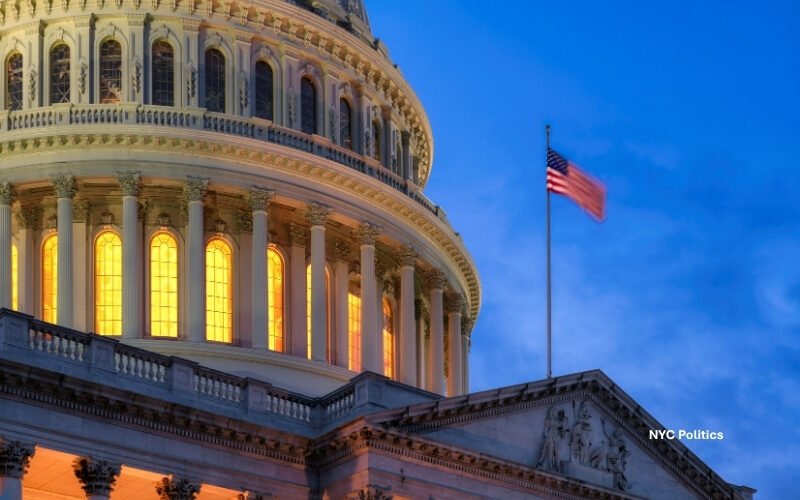
New 2026 polls are beginning to sharpen the picture of what could become one of the most consequential congressional battles in recent years, and New York City is emerging as a central player.
Early data compiled from national surveys shows Democrats with a measurable edge in the generic congressional ballot, a key indicator of overall voter sentiment. While the margins remain fluid, the trend underscores a growing intensity in the race for House control.
For New York, where several competitive districts sit at the intersection of urban and suburban voter dynamics, these early signals carry outsized weight. As the political landscape continues to evolve, the path to congressional power is increasingly running through NYC.
What the New 2026 Polls Reveal
The new 2026 polls focus on the generic congressional ballot, measuring overall party preference rather than individual candidates. While national trends show Democrats with an early edge, the real significance emerges when these numbers are applied to specific districts across New York City.
Here’s a borough-by-borough breakdown of NYC districts and their current standings:
1. Manhattan
- NY-10 (Lower Manhattan & Brooklyn): Democratic Rep. Dan Goldman holds a safe Democratic seat. Turnout in primaries will influence local party dynamics.
- NY-12 (Manhattan & Bronx): Democratic Rep. Jerry Nadler represents a solid Democratic district with strong incumbency.
- NY-13 (Upper Manhattan & Harlem): Democratic Rep. Adriano Espaillat holds a reliably Democratic district.
2. Bronx
- NY-14 (South Bronx & Queens): Democratic Rep. Alexandria Ocasio-Cortez represents a safe Democratic district, though turnout will still shape primary races.
- NY-15 (Northeast Bronx & Westchester fringe): Democratic Rep. Ritchie Torres holds a Democratic stronghold.
3. Brooklyn
- NY-8 (Central & East Brooklyn): Democratic Rep. Hakeem Jeffries is a prominent Democratic seat; turnout will influence adjacent swing neighborhoods.
- NY-9 (Southwest Brooklyn & Queens): Democratic Rep. Yvette Clarke represents a safe Democratic area.
- NY-11 (Staten Island & Southern Brooklyn): Republican Rep. Nicole Malliotakis holds a competitive district. She won re-election in 2022 with a narrow margin, making this a true battleground.
4. Queens
- NY-7 (Eastern Queens & North Brooklyn): Democratic Rep. Nydia Velázquez holds a Democratic-leaning district, historically competitive only in primaries.
- NY-14 (overlaps Bronx & Queens): Democratic Rep. Alexandria Ocasio-Cortez also represents parts of Queens; her high profile makes this district nationally visible.
5. Staten Island & Suburban Context
- NY-4 (Long Island): Republican Rep. Anthony D’Esposito flipped this seat in 2022. Suburban trends here often mirror national sentiment, making early polling insights especially meaningful.
- NY-19 (Hudson Valley): Democratic Rep. Pat Ryan represents a swing district recently changed hands. Early Democratic leads in the new 2026 polls could strengthen his standing.
- NY-22 (Upstate Central NY): Republican Rep. Brandon Williams won narrowly in 2022, making the district highly sensitive to shifts in voter behavior.
These examples show how national trends translate into real stakes at the district level. While the new 2026 polls do not predict winners, they signal where momentum may be building.
Why the Early Lead Matters
The new 2026 polls show Democrats with a national edge, but the House remains closely divided. Small shifts in voter sentiment in swing districts could decide control.
Historically, midterms tend to favor the party out of power, which adds importance to early trends and mobilization efforts. If Democrats maintain their lead, they could strengthen competitive districts. Conversely, Republicans could regain ground in swing areas, particularly suburban and upstate regions.
Top 5 NYC Races to Watch in 2026
| District | Representative | Estimated Partisan Lean | Notes |
|---|---|---|---|
| NY-11 | Nicole Malliotakis (R) | Slight Republican advantage | Competitive Staten Island & southern Brooklyn seat; past flips make it a pivotal battleground. |
| NY-19 | Pat Ryan (D) | Slight Democratic advantage | Hudson Valley swing district; sensitive to national sentiment and small polling shifts. |
| NY-4 | Anthony D’Esposito (R) | Slight Republican advantage | Long Island seat flipped in 2022; suburban turnout critical. |
| NY-22 | Brandon Williams (R) | Lean Republican | Narrow 2022 margin; low turnout areas can decide this district. |
| NY-10 | Dan Goldman (D) | Strong Democratic base | Lower Manhattan & Brooklyn; safe for Democrats but primary turnout could matter. |
Turnout Comparison: NYC vs Suburbs (2025–2026)
Recent elections in New York City reveal significant changes in voter participation that could shape the 2026 congressional vote:
| Region | Approx. Turnout (2025) | Notes |
|---|---|---|
| New York City (General 2025) | ~39% of registered voters citywide | The 2025 mayoral election drew the largest turnout in decades, with more than 2 million New Yorkers voting — roughly 39% of registered voters, a substantial increase compared with previous odd‑year contests. |
| NYC 2025 Primary Turnout | ~29.9% | The 2025 primary reached its highest turnout in more than a decade, with nearly 1.1M ballots cast across the five boroughs. |
| Manhattan (Primary) | ~40.5% | Greater engagement than previous cycles, leading the city in primary turnout. |
| Staten Island (Primary) | ~16.2% | Significantly lower turnout in the primary compared to other boroughs, reflecting persistent participation gaps. |
| Suburban Districts (Long Island & Upstate) | Historically higher turnout | Suburban voters outside NYC typically participate at higher rates in even‑year elections, particularly when federal races are on the ballot (e.g., gubernatorial or congressional elections); this pattern suggests these areas will be important in 2026. |
The turnout boost in 2025, especially for a non‑presidential year, highlights a more engaged electorate, likely driven by high‑profile races such as the mayoral contest. These participation trends provide early context for how energized voters might show up again in 2026, especially in competitive districts across the city and suburbs.
Key Issues Driving NYC Voter Sentiment
- Rising cost of living and housing affordability
- Public safety and crime
- Immigration policy
- Economic growth and job stability
These issues are expected to dominate campaigns across the five boroughs and surrounding suburbs.
Why NYC Is at the Center of the House Fight
New York is expected to play a decisive role in the 2026 elections, with multiple districts across the city and surrounding regions considered highly competitive.
1. Brooklyn and Queens

2. Bronx

3. Staten Island

4. Long Island and Suburban Districts

Momentum Is Building but the Race Is Not Decided
While Democrats hold an early edge in the new 2026 polls, the political environment remains fluid.
Polling trends can shift quickly in response to economic changes, policy decisions, or major national events. The current data reflects early momentum rather than a final outcome.
As the election cycle progresses, voter sentiment is likely to evolve.
The Bottom Line
New 2026 polls show a competitive race for control of Congress, with New York City playing a central role.
Current trends indicate:
- Democrats leading in early national polling
- A closely divided House vulnerable to change
- NYC and its surrounding districts positioned as key decision-makers
The road to House control may run directly through New York.
Readers Need To Know
- All 435 House seats will be contested in 2026
- New York has multiple battleground districts
- New 2026 polls reflect trends, not final results
- Borough and suburban turnout could determine control of Congress
Frequently Asked Questions
What are the new 2026 polls measuring?
They measure national voter preference between Democrats and Republicans using the generic ballot.
Why is NYC important in this election?
New York includes several competitive districts that could decide control of the House.
Can the polling trend change?
Yes. Voter sentiment can shift significantly before Election Day.








Leave a Reply