


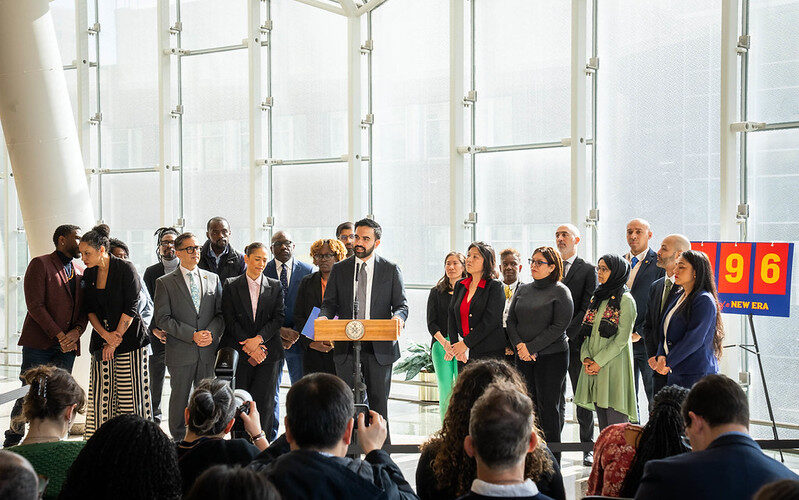
NEW YORK CITY — Mamdani’s Equity Plan is supposed to tackle one of the biggest issues facing New Yorkers right now: the rising cost of living. But instead of offering clear relief, the sweeping proposal is raising new questions about whether City Hall is focusing on the right problems or simply adding more layers of bureaucracy.
Released this week, Mamdani’s Equity Plan introduces a new way to measure economic hardship in the city, while laying out hundreds of policy goals across dozens of agencies. For many observers, the sheer scale of the plan is part of the concern.
What Happened with Mamdani’s Equity Plan
Mamdani’s Equity Plan rolled out as part of a broader City Hall effort to address affordability across New York City. The proposal includes a new “True Cost of Living” metric, or TCOL, designed to estimate what families need to earn to live securely in the five boroughs.
According to the administration, the data suggests that roughly 62 percent of New Yorkers were not economically secure as of 2022. That figure is tied largely to rising expenses tied to housing, childcare, and healthcare.
The plan itself stretches across 45 city agencies. It outlines more than 200 goals, backed by hundreds of strategies and performance indicators meant to track progress.
But the scope of Mamdani’s Equity Plan is also what’s drawing criticism. Some analysts say the plan reads more like a management blueprint than a direct response to the affordability crisis many residents feel every day.
The Background Behind Mamdani’s Equity Plan
Mamdani’s Equity Plan builds on a long-running effort by city leaders to address inequality and rising living costs. Over the past decade, New York has seen rents climb, childcare costs surge, and healthcare expenses take up a larger share of household budgets.
The mayor’s new TCOL metric attempts to capture those pressures by defining what it means to live with “economic security” in New York City. Under that definition, even households earning close to $160,000 annually could still fall short of the threshold.
That framing has sparked debate. Critics argue that the measure stretches the definition of financial hardship too far, grouping middle-income families with those facing deeper economic struggles.
There are also questions about the data behind the metric. The estimates rely in part on older Census data projections and modeled assumptions rather than real-time household data.
How Mamdani’s Equity Plan Impacts NYC Neighborhoods
For residents across the five boroughs, Mamdani’s Equity Plan lands at a moment when affordability is already shaping daily life.
Rent remains the biggest pressure point in neighborhoods from the Bronx to Brooklyn. Families are also juggling rising childcare costs and healthcare bills that continue to climb year after year.
The plan’s findings on disparities add another layer to the conversation. According to the report, a larger share of Black and Hispanic New Yorkers fall below the TCOL threshold compared with white residents.
Still, the data also suggests that once households fall below that threshold, the gap between groups narrows. That points to a broader issue affecting residents across the board: the underlying cost of living in New York itself.
For many neighborhood advocates, the concern is that Mamdani’s Equity Plan does not directly address those root causes in a way that would bring immediate relief.
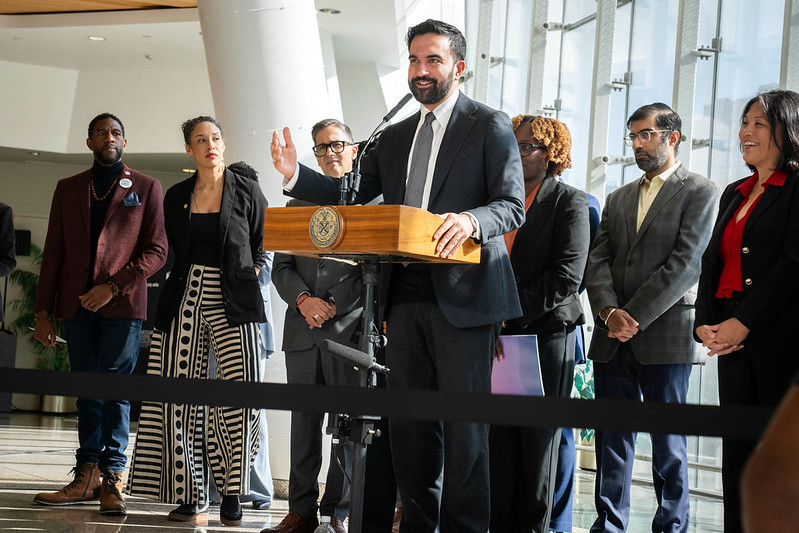
Photo: NYC Mayors Office/Flickr
The Bigger Trend Behind Mamdani’s Equity Plan
Mamdani’s Equity Plan arrives as New York City continues to grapple with long-term structural challenges tied to affordability.
Housing supply remains one of the biggest factors driving high costs. Limited new construction, combined with strict land-use regulations, has kept inventory tight and rents elevated.
Healthcare spending is another major contributor. As medical costs rise, they consume a larger share of household income, leaving less room for other essentials.
At the same time, the city is facing financial pressure of its own. Budget projections show a potential shortfall of several billion dollars over the next fiscal cycles, raising questions about how much new spending or programming the city can realistically support.
Against that backdrop, critics say Mamdani’s Equity Plan reflects a broader trend in city governance: expanding frameworks and metrics rather than focusing on policy changes that could lower costs more directly.
What Happens Next?
Mamdani’s Equity Plan is still in its early stages, and much of its impact will depend on how City Hall translates its goals into action.
In the coming months, agencies are expected to begin implementing strategies and tracking progress using the plan’s performance indicators. That could mean new reporting systems, updated programs, and expanded oversight across departments.
At the same time, the debate around affordability is unlikely to fade. Housing policy, childcare access, and economic growth will remain central issues for both policymakers and residents.
What many New Yorkers will be watching closely is whether Mamdani’s Equity Plan leads to measurable changes in their daily lives. That includes whether rents stabilize, whether services become more accessible, and whether wages keep pace with the city’s rising costs.
For now, the plan has sparked a citywide conversation. The next test will be whether it delivers results beyond the metrics.
What Readers Want to Know
What is Mamdani’s Equity Plan trying to do?
It aims to measure and address affordability challenges in NYC through a new cost-of-living metric and agency-wide policy goals.
Why is Mamdani’s Equity Plan controversial?
Some critics argue it focuses too much on frameworks and metrics instead of directly lowering housing and living costs.
When will changes from Mamdani’s Equity Plan be felt?
Implementation is ongoing, but noticeable impacts will likely take time as agencies roll out programs and track results.











Leave a Reply