


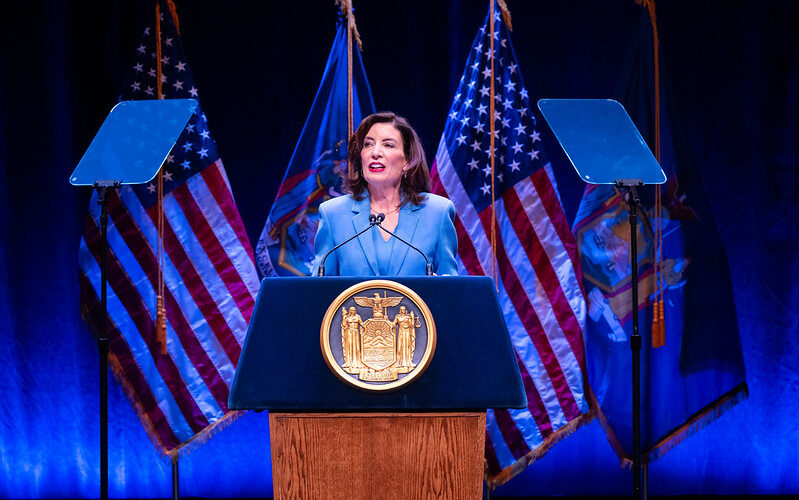
Governor Kathy Hochul today introduced her 2026 State of the State plan aimed at boosting success for New York’s youth via fundamental, research-backed teaching methods, greater support for educators, and a commitment to nurturing, healthy school environments. The strategy highlights strong math and reading instruction, sustained efforts to attract and keep quality teachers, and broadened access to affordable SUNY and CUNY degree and career programs.
“As New York’s first mom Governor, I know firsthand how much the strength of a school system impacts where families choose to settle,” said Governor Hochul. “My mission is to ensure New York’s students are among the nation’s most well-prepared—which is why we’re adopting tried-and-true educational strategies in essentials like math and reading, and reinforcing the teacher workforce. With these initiatives, parents can feel confident their children will thrive here.”
Refocusing on Foundational Instruction in Math and Literacy
Building on a statewide move toward Science of Reading principles, the plan notes improved literacy outcomes as schools shift to proven instructional methods.
Next, Hochul seeks a math reboot: She has proposed legislation for the State Education Department (SED) to share top instructional practices in math and equip educators with best practice guidance.
The plan also asks SUNY and CUNY to launch micro-credentials for evidence-based math teaching and to start new statewide professional development, with a focus on districts where math results are behind.
Building a Stronger Teacher Workforce
New York faces ongoing teacher recruitment and retention hurdles, with a projected need for up to 180,000 additional teachers over the next ten years, including early childhood educators.
Hochul’s proposals include:
- An expedited certification route for career changers or those with bachelor’s degrees, including credits for pre-certification work in priority classrooms.
- P-TEACH programs through the College in High School Opportunity Fund, allowing high schoolers to get a jump start on education careers.
- Upgrades to the TeachNY online platform to help over 7,000 future teachers statewide in the next three years.
- A Rockefeller Institute-led Task Force involving key government and education parties to study and respond to shortages and barriers.
Making Education Data Transparent and Accountable
Due to New York’s disconnected data streams, it’s currently difficult to fully track student progress. The state has launched a secure, privacy-focused system connecting records across early learning through the workforce.
New funding would grow this system, and a multi-agency board would provide powerful oversight and privacy protection.
Expanded Programs for Indigenous Youth, Black and Latina Girls
To further support underrepresented groups, the plan expands the Indigenous Youth Service Project to more schools, and reaffirms support for Black Girls and Latina Mentoring Initiatives designed to promote confidence and leadership.
For Indigenous youth, more districts will offer service learning based on local values. For Black and Latina girls, mentoring programs continue to provide guidance for professional and personal growth.
Bridging Higher Education and Job Opportunities
The proposals focus on keeping SUNY and CUNY affordable and aligning education with career opportunity.
- Freezing tuition at SUNY and CUNY’s flagship campuses, adding operational funds.
- Expanding SUNY and CUNY Reconnect for free community college in high-demand fields, plus more eligibility for adults.
- Launching New York Career Connect for more internships and career-aligned programs, including intensive career advisement and mapping for students.
- Boosting Education Debt Consumer Assistance Program (EDCAP) services, offering student loan support and anti-predatory lending education.
Advancing Youth Mental Health, Promoting Online Safety
Hochul’s plan calls for an array of mental health measures: Teen Mental Health First Aid for all 10th graders, growing safe spaces for at-risk youth, and new clubhouses to aid recovery from substance use disorder. Efforts also include opioid recovery housing and augmented supports for Indigenous youth.
On digital issues, the plan features Safe By Design to create safer online spaces for kids, enforces fair play in online gaming, and boosts digital citizenship and mental health in schools.
Recent Accomplishments in New York Education
The announcement builds on last year’s progress, such as:
- Investing $37.6 billion in School Aid and modernizing the Foundation Aid formula.
- Providing universal free meals to 2.7 million students.
- Implementing classroom cellphone bans, reporting higher student engagement.
- Offering free community college for ages 25 to 55 in high-need sectors.
- Simplifying and expanding TAP access, especially for part-time learners.
- Reaching a top-six FAFSA completion ranking nationwide.
- Expanding the number of school-based mental health clinics to cover 25% of New York public schools.
- Passing the SAFE for Kids and Child Data Protection Acts to safeguard student data and limit social media risks.
FAQ: Quick Answers on Hochul’s 2026 Plan
What’s new for math instruction? Required sharing of math instructional best practices, professional development, and new SUNY/CUNY credentials and pilots for underperforming districts.
How is reading instruction addressed? Widespread adoption of Science of Reading methods, plus no-cost credentials and targeted supports for lagging schools.
What’s in the teacher pipeline plan? Fast-track certification for career switchers, high school college credit programs, upgrades to TeachNY, and a dedicated task force.
What is SUNY and CUNY Reconnect? Free community college for adults in growing fields, now covering more degree options.
What is the Empire AI Student Challenge? A new K–12 challenge where teams solve public problems with AI, guided by educators and with events at SUNY and CUNY campuses.









Leave a Reply