


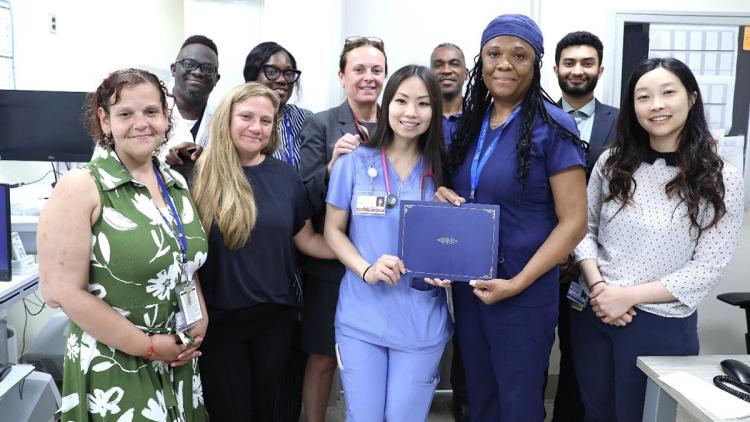
Quick-Thinking Therapist Spurs Citywide Safety Upgrade
It started as an ordinary hospital transport in the Bronx—but one respiratory therapist’s sharp instincts made all the difference. When a critically ill, pregnant patient was being moved between facilities, everything nearly took a dangerous turn, until quick action and a simple question changed the outcome for the better. The result? NYC Health + Hospitals now has a required ICU transport safety checklist, proof that alert staff can shape hospital policy far beyond their own floor.
A Close Call During a Routine Transfer
Hospital-to-hospital transfers happen all the time in New York City. On this occasion, the patient—eight weeks pregnant with twins and facing a severe pulmonary embolism—needed continuous oxygen while moving from North Central Bronx to Jacobi. Respiratory therapist Winnie Wong noticed something others missed: Would there be enough oxygen for the journey?
Trusting her instincts and recalling past experiences with high-flow tanks, Wong insisted on bringing extra oxygen and an Ambu bag. “Oxygen runs out fast at high flow,” she explained. That decision, simple as it seemed, proved crucial.
How One Person’s Caution Averted Crisis
Wong’s commitment—backed up by her colleague Ketty Seide—ensured the patient remained stable. As later confirmed, their actions likely prevented a life-threatening emergency. Leadership at the hospital emphasized that no checklist can capture every risk; sometimes it takes someone on the frontlines, asking the right question at the right time. Dr. Chinyere Anyaogu, Deputy Chief Medical Officer, put it simply: “She used her lived experience of what could possibly go wrong. And unbeknownst to her, she taught that EMT something he will never forget.”
From One Intervention, System-Wide Progress
After this incident, North Central Bronx launched a mandatory ICU transport checklist, with extra focus on oxygen supplies and equipment checks. It’s a great example of how staff innovations ripple outward—policy and patient safety are sometimes shaped by small moments of persistence.
“Winnie asked such a simple question in such a non-threatening way: ‘Do you have enough oxygen?’ And then she was persistent. She had a gut feeling, and she didn’t let it go,” noted Heidi Baer, the hospital’s Patient Safety Officer. Thanks to this, all future ICU transfers now run through a robust safety protocol, becoming a model for other hospitals in the system.
How the Checklist Strengthens Patient Transfers
The newly introduced protocol aims to prevent oxygen shortages — a particular worry for high-risk patients who rely on continuous respiratory support. These safeguards are now standard:
- Pre-transfer verification of oxygen capacity
- Ready-to-go backup equipment
- Standardized ICU transport checklist
- Staff cross-verification before leaving
The objective is to minimize the unexpected during critical transfers and ensure top-notch safety every time.
Why Everyday Vigilance Matters
This event spotlights a larger truth: even minor gaps in medical routines can lead to emergencies. Experienced staff often spot these holes before they become headlines. That’s why fostering a culture of careful questioning and persistent follow-up is so important in healthcare—sometimes, it’s how we get policy change that truly protects patients.
Internally, Winnie Wong’s intervention is now viewed as a shining example of how one person’s attention to detail can create lasting improvement for everyone.
Common Questions, Answered
What was the therapist’s key action?
Winnie Wong questioned whether there was enough oxygen prepared for a high-risk ICU transfer, which prevented a possible emergency.
What changed after the event?
NYC Health + Hospitals now requires a comprehensive checklist for ICU transfers, guaranteeing oxygen safety and equipment checks.
Why was the situation risky?
The patient needed high-flow oxygen, which can be used up quickly—without backup, a shortage could have been catastrophic.
Stay in the Loop
For news on NYC policy, healthcare, and more, sign up for our newsletter. Don’t miss the latest citywide updates delivered straight to your inbox!