


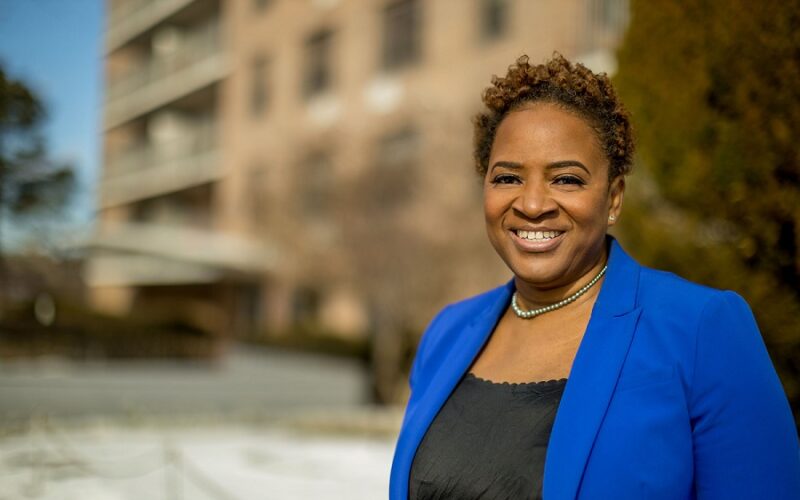
New legislation introduced by the East New York lawmaker would provide shoppers across New York with a 10% discount for using self-checkout, while targeting one of the biggest issues facing her district: affordability.
EAST NEW YORK, BROOKLYN — Every week, thousands of East New York residents head to neighborhood supermarkets and major retailers to buy groceries, household products, school supplies and other necessities, only to discover that the same shopping cart they filled a year or two ago now costs noticeably more. While inflation has slowed from its peak, the higher prices have remained, leaving many families to make difficult decisions about where they can cut back and how far each paycheck can stretch. For households already balancing rising rents, utility bills and transportation costs, even modest increases at the checkout counter can have a meaningful impact on a monthly budget.
That is the problem Assemblywoman Nikki Lucas says she is trying to address with new legislation introduced in Albany.
Lucas, who represents East New York, Starrett City, Brownsville and Canarsie in the New York State Assembly, has introduced Bill A11501, a proposal that would provide shoppers with a 10% discount whenever they use a self-checkout kiosk. Although the legislation grew out of conversations Lucas says she has had with constituents throughout her Brooklyn district, the proposal would apply statewide if approved by the Legislature and signed by the Governor, making it a potential benefit for shoppers across New York.
According to the official press release, the bill is intended to recognize the increasingly active role consumers play during the checkout process while providing immediate savings to families facing higher everyday expenses.
Why the bill could matter in East New York
For residents of East New York, the proposal is more than a policy discussion taking place in Albany—it could directly affect how much they spend during routine shopping trips. The neighborhood is home to Gateway Center, one of Brooklyn’s busiest retail destinations, where thousands of shoppers visit stores such as Target, Home Depot, BJ’s Wholesale Club, ShopRite and other national retailers every week. Many of those stores now rely heavily on self-checkout technology, making it a familiar part of the shopping experience for local consumers.
If Bill A11501 becomes law, a family spending $200 on groceries and household necessities could save $20 simply by choosing self-checkout. Over the course of a year, those savings could become significant for families making weekly shopping trips, particularly seniors living on fixed incomes, working parents raising children, students and residents carefully managing household budgets. While the exact amount would vary from family to family, Lucas argues that the cumulative savings could provide meaningful relief at a time when many New Yorkers continue to feel the effects of higher prices.
The proposal also reflects a broader reality throughout East New York and many other working-class neighborhoods: affordability is no longer limited to conversations about housing. Residents are increasingly concerned about the rising cost of everyday living, from groceries and personal care products to cleaning supplies, clothing and home improvement materials. Lucas believes practical savings at the cash register can become part of the broader effort to make life more affordable.
A different approach to affordability
Unlike many proposals that seek to reduce financial pressure through tax credits, rebate programs or expanded government assistance, Bill A11501 focuses on lowering costs at the point of purchase. The legislation is built around the idea that consumers have gradually taken on responsibilities that were once handled almost entirely by store employees. Today, shoppers routinely scan merchandise, bag purchases, complete payments and troubleshoot self-checkout systems, performing work that traditionally belonged to cashiers.
Lucas believes consumers should receive a share of the efficiencies created by that shift.
“Families are paying more than ever for food, household goods and everyday necessities,” said Assemblywoman Nikki Lucas. “At the same time, retailers are increasingly asking customers to scan, bag and process their own purchases through self-checkout. If New Yorkers are doing part of the work, they should share in the savings. That’s only fair. This bill is about fairness, affordability and recognizing the value consumers bring to today’s shopping experience.”
Recognizing how shopping has changed
Over the last decade, self-checkout has evolved from a convenience offered by a handful of retailers into a standard feature at supermarkets, home improvement stores and large retail chains across New York. In many locations, customers now complete most or all of the checkout process themselves, while employees spend more time assisting shoppers at self-checkout stations than operating traditional cashier lanes.
Lucas says the legislation acknowledges that reality without discouraging retailers from embracing new technology. Instead, she argues that innovation should create benefits for both businesses and consumers. “This is not about discouraging innovation,” Lucas said. “Innovation should benefit everyone. Retailers benefit from greater efficiency and faster checkout operations, while customers contribute their own time and effort every time they scan, bag and complete their own purchases. A 10 percent discount is a reasonable way to recognize that partnership while helping New Yorkers save money.”
At the same time, Lucas said the bill should not be interpreted as criticism of businesses that continue to invest in traditional customer service, noting that many shoppers still prefer interacting with a cashier when making purchases.
“Many customers still value the personal service that only a cashier can provide,” Lucas said. “While most large retailers continue to increase their self-checkout aisles, the retailers that continue to invest in their employees and maintain staffed checkout lanes should be commended. Great customer service still matters, and businesses that continue investing in people understand that providing a positive shopping experience builds lasting customer loyalty.”
Part of a broader affordability conversation
The legislation arrives as affordability continues to dominate conversations in East New York and throughout New York City. Community organizations, elected officials and residents have increasingly focused on finding practical ways to reduce the financial burden created by higher living costs, recognizing that many families are looking not only for long-term policy changes but also for solutions that can produce immediate, tangible savings.
“As technology transforms the way we shop, government has a responsibility to make sure consumers are not left behind,” Lucas said. “Every day I hear from families in East New York, Starrett City, Brownsville and throughout the 60th Assembly District who are struggling with the rising cost of groceries and everyday necessities. The challenges facing my district are the same challenges facing working families across New York and in cities throughout America. Everyone is talking about affordability. It’s time we stop talking about it and start creating real solutions that people can actually feel at the checkout counter, in their household budgets and in their daily lives. This bill is the first of many affordability solutions I intend to introduce because New Yorkers deserve more than promises, they deserve policies that put money back into their pockets.”
The Road Ahead for Bill A11501
Bill A11501 will now move through the legislative process in Albany, where it will be assigned to committee before lawmakers determine whether it advances to the full Assembly and Senate for consideration. If enacted, the proposal would apply across New York State, extending the benefits beyond Lucas’ district while addressing an issue she says began with the concerns she heard from families in East New York.
Whether the bill ultimately becomes law or sparks a broader debate about the future of self-checkout and consumer savings, it has already added a new perspective to New York’s affordability discussion. The bill is likely to spark broader discussions about other ways to reduce the financial burden on New Yorkers.







Leave a Reply