

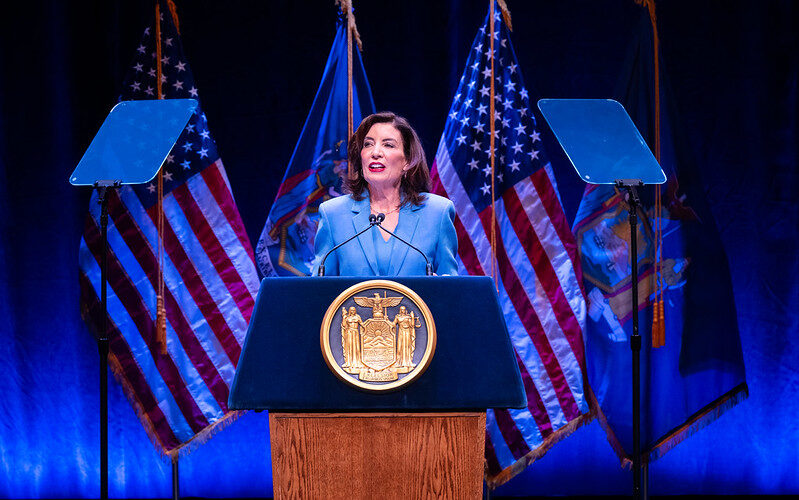
Governor Kathy Hochul has announced her 2026 State of the State priorities, introducing a sweeping plan to advance educational outcomes through classic, evidence-based approaches, more robust support for teachers, and improved school wellness. Central aspects include investing in high-caliber math and reading instruction, a long-term focus on teacher recruitment and retention, and more affordable higher education and workforce opportunities via SUNY and CUNY.
“Being the state’s first mom Governor means I recognize just how vital schools are when families settle down,” Hochul shared. “We’re doubling down on reading and math basics, adopting proven instructional models, and ensuring the teacher pipeline is strong. These efforts mean New York remains a top choice for parents seeking promising futures for their children.”
Prioritizing Core Math and Literacy Skills
Hochul’s plan continues literacy improvement by leveraging Science of Reading research, with early signs of better proficiency in districts adopting evidence-driven reading practices.
The new focus: math. By law, SED would provide math best practices to all school districts. The plan supplies teachers with resources and guidance for adopting the latest, effective math methodologies.
SUNY and CUNY will be tasked with developing micro-credential programs for math teachers, and regional training resources will roll out, especially in areas with the lowest math outcomes.
Ensuring a Strong and Diverse Teaching Force
Facing the possible need for 180,000 new teachers, especially in early childhood, the plan features:
- A fast-track program for career switchers and bachelor’s graduates, including pre-certification work in priority school settings.
- P-TEACH programs, offering motivated high schoolers college credit toward education careers.
- Expanded TeachNY resources, targeting over 7,000 teacher recruits in three years through guidance and coaching.
- A new state-led task force, uniting educational and governmental agencies, to analyze teacher shortages and recommend policy solutions.
Promoting System Transparency and Student Outcomes
With disconnected datasets leaving student progress unclear, Hochul’s administration is building a privacy-centered, unified data platform. Plans call for new investments and a cross-agency board to extend and safeguard this system.
Support for Indigenous Youth and Young Women of Color
Next, the plan expands opportunity programs for Indigenous students—such as the Indigenous Youth Service Project—and continues commitments to Black Girls and Latina Mentoring Initiatives.
Efforts focus on empowering academic achievement, cultural pride, and leadership among underserved groups.
College Affordability and Career Preparation
To keep SUNY and CUNY accessible, Hochul proposes:
- Tuition freezes for resident undergraduates at key campuses and added operations funding.
- Expansion of SUNY and CUNY Reconnect, offering adults free community college in fast-growing fields, and eligibility for a wider range of students.
- Launching New York Career Connect, integrating career advising with academics and expanding hands-on work-based learning opportunities.
- Enhancing EDCAP to provide extensive loan guidance and educational tools to prevent debt issues and predatory lending.
Investing in Youth Mental Health and Online Wellbeing
Among key behavioral health measures: all 10th graders to get Mental Health First Aid training, more support for LGBTQ+ youth, safe spaces for at-risk populations, added youth clubhouses, and recovery services. To promote online safety, the plan includes digital wellness initiatives and new safeguards on betting and distraction in schools.
Recent Educational Advances Across New York
The proposal builds on prior investments and achievements:
- $37.6B in School Aid, Foundation Aid fully funded and formula updated.
- Universal free breakfast/lunch for 2.7 million students; families save about $165 monthly per child.
- Cellphone bans established in most classrooms, yielding better participation and climate.
- Tuition-free community college expansion for older students in priority sectors.
- Simpler, broader TAP access, with more eligibility for part-timers.
- Sixth in the U.S. for FAFSA completion, thanks to the Universal FAFSA program.
- 1,300 school-based mental health clinics now in operation.
- SAFE for Kids and Child Data Protection Acts enforce privacy and regulate social media for minors.
FAQ Corner
How is math instruction changing?
Mandatory best-practices guidance from SED, SUNY/CUNY teacher microcredentials, regional professional learning hubs for weaker districts.
What’s included in the reading plan?
District-wide adoption of evidence-based teaching, free Science of Reading microcredentials, supports for lagging schools.
What steps make up the teacher pipeline proposal?
Accelerated pathways, P-TEACH dual enrollment, upgraded TeachNY, strategic task force.
What is SUNY/CUNY Reconnect and its expansion?
Free college for adults in expanded high-need fields; now includes eligible nursing candidates.
What is the Empire AI Student Challenge?
Statewide K–12 teams, guided by educators, solving public issues with AI—training and competitions at SUNY/CUNY campuses.


















Leave a Reply