

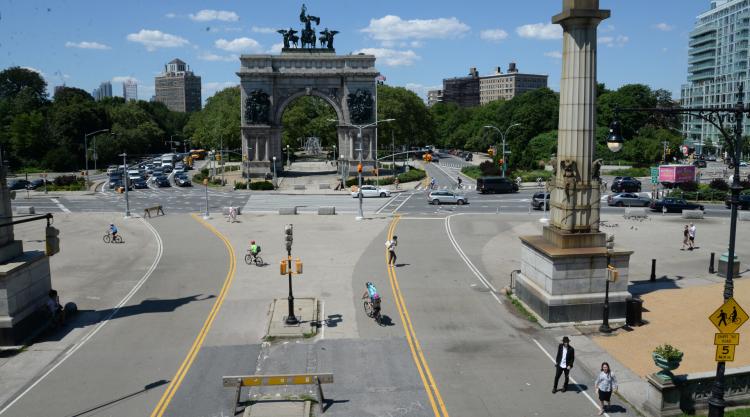
Mayor Zohran Mamdani has unveiled a sweeping proposal to redesign Grand Army Plaza in Brooklyn, aiming to improve safety, simplify traffic flow, and reconnect the historic entrance to Prospect Park. The plan, developed with NYC DOT, includes public workshops starting April 23 and follows strong community support from prior surveys.
A long-discussed Brooklyn traffic nightmare could soon be getting a complete reset.
Mayor Zohran Mamdani has unveiled a major proposal to redesign Grand Army Plaza, one of the borough’s most iconic and most chaotic intersections, in an effort to turn it into a safer and more welcoming gateway to Prospect Park.
The plan, developed alongside the New York City Department of Transportation, focuses on simplifying movement through the area while prioritizing pedestrians, cyclists, and the thousands of daily transit riders who pass through the corridor.
Details of the proposal were first shared in a press release from NYC Newswire., which describes the project as a full rethinking of how Grand Army Plaza connects to Brooklyn’s most visited green space.
What Happened: A New Vision For Grand Army Plaza
The proposed redesign would physically and visually reconnect the Soldiers’ and Sailors’ Memorial Arch with Prospect Park, restoring a sense of continuity that planners say has been lost over time.
According to city officials, the goal is to transform one of Brooklyn’s most confusing intersections into a clearer, safer public space that works for everyone moving through it.
Mayor Mamdani said, “Grand Army Plaza is the gateway to Brooklyn’s backyard, Prospect Park — and it should welcome New Yorkers with street design that puts safety first. Anyone who’s tried to cross here knows how dangerous and chaotic the streets can be. This redesign is long overdue and will provide a sense of ease and enjoyment to one of Brooklyn’s most important public spaces.”
The project also aims to streamline bus routes serving the area, where tens of thousands of riders pass through daily.
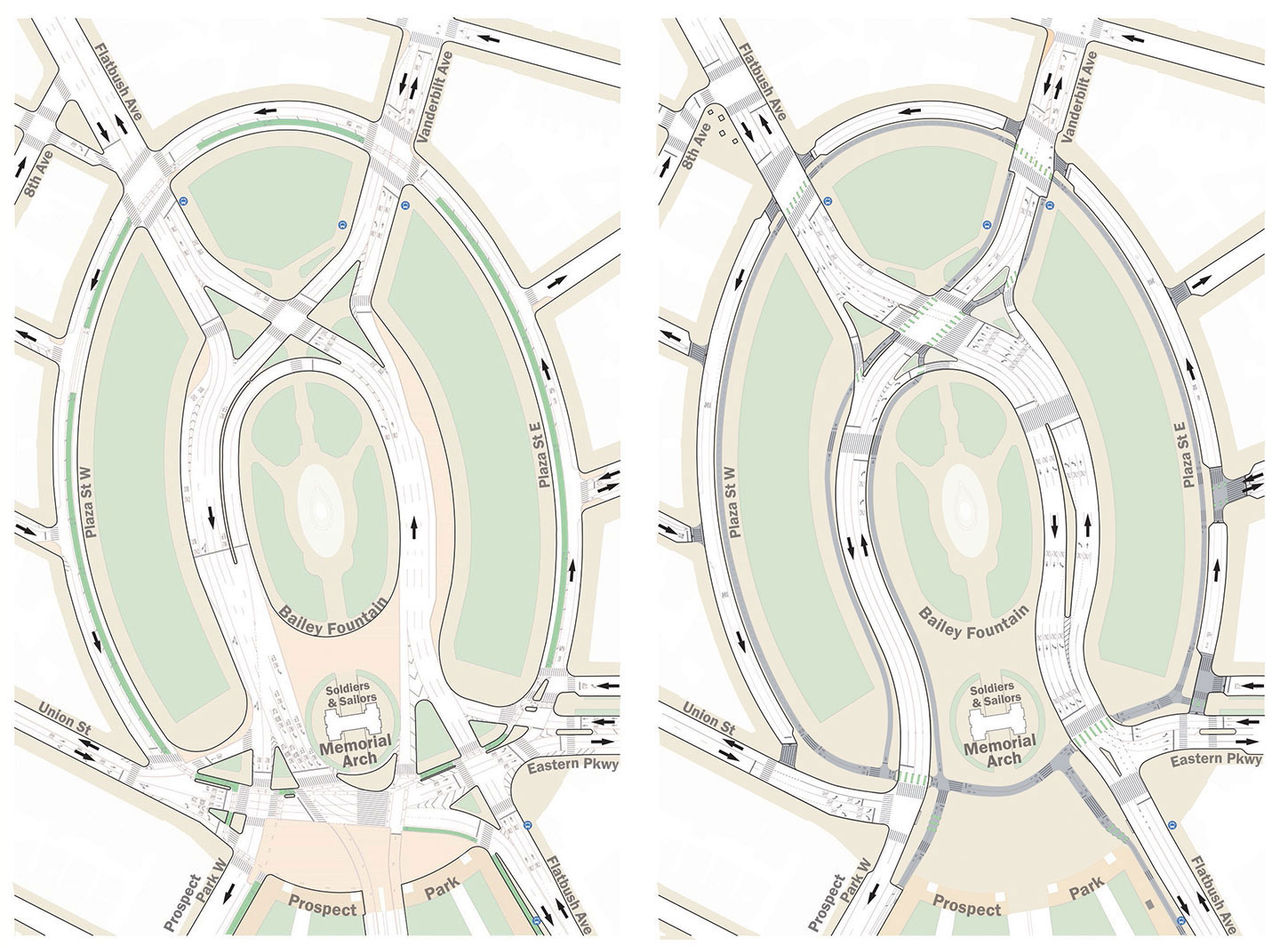
Photo: NYC Newswire Official. Grand Army Plaza Redesign Plan NYC DOT Grand Army Plaza’s current design (L) and NYC DOT’s proposal (R).
Background: Years Of Community Pressure And Planning
Grand Army Plaza has long been viewed as one of Brooklyn’s most difficult public spaces to navigate, especially for pedestrians trying to reach Prospect Park.
Previous community outreach efforts showed strong support for major changes. City data cited in the proposal indicates that more than 85% of survey respondents supported a redesign that reconnects the plaza to the park and improves safety conditions.
City officials say the plan builds on years of feedback rather than a sudden policy shift.
The redesign is also part of a broader push by city agencies to reimagine how major public spaces function, especially in areas where transit, traffic, and pedestrian use intersect in tight corridors.
Neighborhood Impact: Brooklyn’s Most Crowded Gateway
For many Brooklyn residents, Grand Army Plaza is not just a landmark — it is a daily obstacle.
The area sees heavy foot traffic, major bus routes, and constant vehicle congestion, often all competing for limited space.
Shahana Hanif called the redesign “truly transformative,” saying, “Grand Army Plaza has long been one of the most challenging intersections in Brooklyn — a web of roadways that has been unsafe for pedestrians and cyclists to navigate for decades. This redesign is truly transformative. Connecting Prospect Park to the Plaza will finally give New Yorkers the safe, accessible public space this iconic landmark deserves.”
Transit riders are also expected to see changes, particularly those who rely on the B41 and B6 bus lines, which together carry tens of thousands of passengers daily through the corridor.
City officials argue that improving flow in this area could reduce delays and make one of Brooklyn’s busiest transit hubs more reliable.
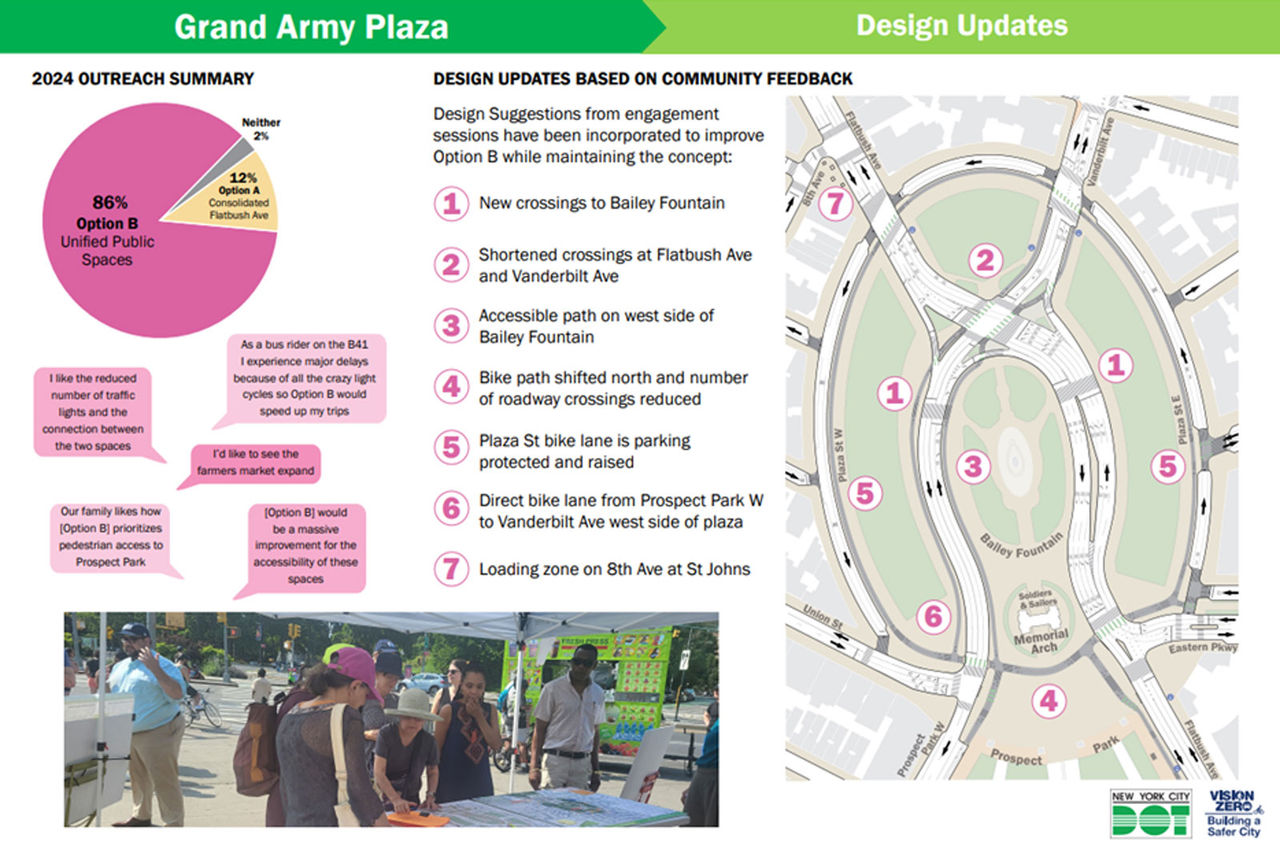
Photo: NYC Newswire Official. Grand Army Plaza Redesign Plan NYC DOT NYC DOT’s design for Grand Army Plaza, developed through years of community feedback.
Bigger Picture: Reclaiming Public Space In NYC
The Grand Army Plaza proposal fits into a broader citywide trend: rethinking how New York allocates space between cars, pedestrians, and cyclists.
Over the past decade, city planners have increasingly focused on redesigning intersections and corridors that prioritize safety over throughput.
Supporters of the project say it reflects a shift toward treating public space as something to be experienced, not just passed through.
Antonio Reynoso said the plan reflects that change, noting that the plaza could become a “world-class gateway” to Prospect Park.
Advocacy groups and park officials have also long pushed for improvements, arguing that the current layout discourages safe and intuitive access to one of Brooklyn’s most important public spaces.
What Happens Next
The city will begin a series of public workshops starting April 23, including in-person sessions at Grand Army Plaza. Residents will also have the opportunity to participate in a virtual workshop scheduled for April 29 from 6 p.m. to 7:30 p.m. via Zoom, expanding access for those unable to attend in person. Click here to register in advance for the event.
Officials say the final capital project scope will be developed later this year, with additional design and reconstruction options still under review.
Feedback will also be collected through a city survey available during the workshop period.
For now, the proposal marks an early but significant step toward reshaping one of Brooklyn’s most heavily traveled and historically complex intersections.
Whether it becomes reality will depend on design refinements, funding decisions, and continued community input in the months ahead.
Additional details about the plan were first outlined in a press release published via NYCNewswire.
What Readers Want to Know
What is being proposed at Grand Army Plaza?
A major redesign to improve safety, transit flow, and pedestrian access to Prospect Park.
Why is this area being redesigned?
It is considered one of Brooklyn’s most congested and confusing intersections.
When will changes happen?
Public workshops begin April 23, with final plans expected later this year.











Leave a Reply
You must be logged in to post a comment.