


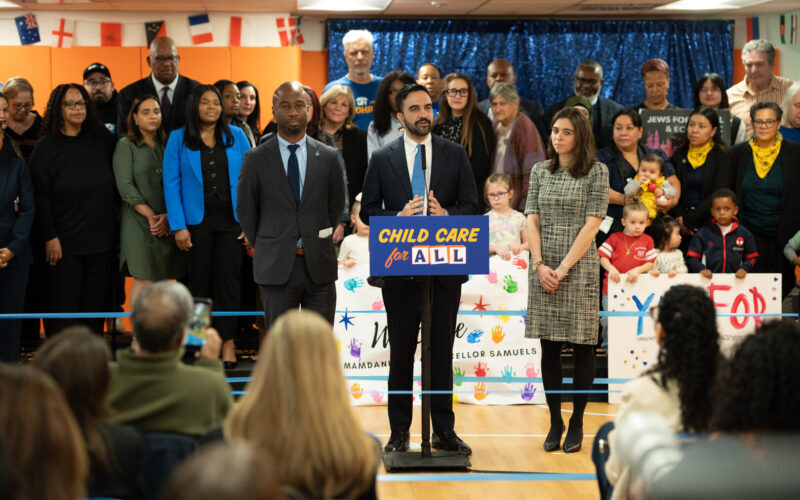
As announced on NYC Newswire, Zohran Mamdani has introduced a new Child Care Plan for NYC designed to expand access to affordable early childhood care for working families across the five boroughs. The proposal is part of a broader effort to reduce the financial pressures facing parents while improving early education opportunities for young children in New York City.
City leaders say the plan is intended to strengthen support systems for families by increasing the number of available child care seats and expanding programs for toddlers and infants. For many households in New York City, child care costs represent one of the largest monthly expenses, often rivaling housing or health care costs.
The initiative also includes a significant expansion of the city’s 3-K early childhood education program. According to city officials, the expansion will add more than 1,000 new 3-K seats across 56 ZIP codes throughout all five boroughs, with the first wave of new seats scheduled to roll out beginning in September 2026.
Mayor Mamdani emphasized the importance of making early childhood education more accessible to families across the city.
“For too long, families were promised universal 3-K but offered seats miles away — forcing them to pay out of pocket for child care or leave the city,” Mamdani said.
“Today we’re making a new commitment: government can deliver real relief from the affordability crisis. By making 3-K truly universal, we’re building a city where every New Yorker can afford to raise a family.”
Addressing the Cost of Child Care in New York City
The cost of child care has become a major issue for families throughout New York City. Private child care can cost tens of thousands of dollars per year, placing a heavy financial burden on parents, particularly those with multiple young children.
Officials say the new Child Care Plan for NYC aims to help ease that burden by expanding publicly supported programs that provide free or subsidized care. The initiative builds on the city’s existing early childhood programs, including universal pre-K and the 3-K program, which provide early education opportunities for many families.
However, those programs typically begin when children reach three or four years old. The new proposal focuses on closing the gap for younger children who still require care before entering those programs.
Expanding Care for Younger Children
One of the key elements of the Child Care Plan for NYC is the introduction of additional child care seats for toddlers. The initiative includes a pilot program that would create thousands of new spaces for children around two years old, helping families who often struggle to find affordable care during the earliest stages of childhood.
City officials say the pilot program is expected to launch in select communities where demand for child care services is particularly high. These neighborhoods were chosen based on factors such as population density, income levels, and the availability of licensed child care providers.
The new 3-K expansion will reach communities across the Bronx, Brooklyn, Manhattan, Queens, and Staten Island, targeting ZIP codes where demand for early childhood education has been rising.
If the pilot proves successful, the administration hopes to expand the program in the coming years, potentially making child care services available to a much larger number of families throughout the city.
Supporting Working Parents
Supporters of the Child Care Plan for NYC argue that affordable child care plays a critical role in helping parents remain in the workforce. Many parents, particularly mothers, are forced to reduce work hours or leave their jobs entirely due to the high cost of child care.
By expanding publicly funded programs, the city hopes to make it easier for parents to pursue employment or education while ensuring their children receive safe and nurturing care.
Advocates also emphasize that early childhood programs benefit not only families but also the broader economy. When parents have reliable child care options, they are more likely to participate in the workforce, which can help strengthen local economic growth.
Partnerships With State Leaders
The success of the Child Care Plan for NYC will depend in part on cooperation between city and state governments. State officials have expressed support for expanding child care programs as part of broader efforts to address affordability and support working families.
Governor Kathy Hochul also highlighted the importance of strengthening child care access across the state.
“New York’s families thrive when our kids are supported and families aren’t burdened by the costs of childcare,” Hochul said. “I’m proud to partner with Mayor Mamdani to expand 3-K to more families across all five boroughs, building on our progress to deliver universal childcare and build a more affordable New York for all.”
By coordinating efforts across different levels of government, policymakers hope to build a sustainable system capable of serving families throughout the city.
Long-Term Vision for Universal Child Care
While the initial phase of the proposal focuses on expanding services for toddlers, the long-term goal is much broader. The administration has indicated that the Child Care Plan for NYC could eventually evolve into a universal system that provides early childhood care from infancy through preschool.
Such a system would create a seamless pathway for children to move from early child care programs into pre-K and later into the public school system.
Education experts often highlight the importance of these early years for cognitive development and social learning. High-quality early education can improve language skills, emotional development, and school readiness, helping children succeed later in life.
Support From Advocates and Community Groups
Early childhood advocates and education groups have welcomed the announcement of the Child Care Plan for NYC, noting that access to affordable care remains one of the most pressing issues for families in the city.
Community organizations that work with low-income families say the expansion of child care programs could help reduce financial stress while providing children with important early learning experiences.
Advocates also point out that expanding child care can help address inequalities in access to education. Families with fewer resources often struggle to afford private child care options, making publicly supported programs essential for ensuring equal opportunities.
Challenges Ahead
Despite widespread support for expanding child care access, implementing the Child Care Plan for NYC will require significant planning and investment. Officials will need to recruit additional child care providers, secure funding, and ensure that facilities meet safety and quality standards.
Some analysts also note that expanding the system citywide could take several years, particularly if the program grows into a universal model.
However, supporters say the pilot program represents an important first step toward building a stronger early childhood education system for New York City.
What the Plan Could Mean for Families
If the initiative moves forward as planned, thousands of families could gain access to more affordable child care options in the near future. Over time, the expansion of early childhood programs could help make New York City more accessible for working parents.
By focusing on affordability and access, the Child Care Plan for NYC reflects a broader effort to address the economic challenges facing families throughout the city.
For parents who struggle to balance work responsibilities with the high cost of child care, the proposal could represent a meaningful step toward greater stability and opportunity.
For readers looking to stay informed about policy developments and major decisions affecting the city, NYC Politics continues to provide factual reporting on the issues shaping New York City’s future.









Leave a Reply